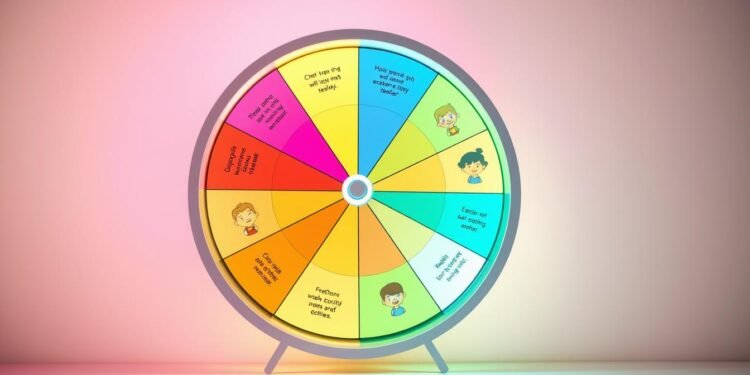
Have you ever wondered how to help young ones better understand their feelings? Emotional literacy is a critical skill that shapes how children navigate the world around them. One effective tool for this is the emotion wheel, a visual guide that simplifies complex emotions into easy-to-understand categories.
Originally designed by Robert Plutchik, the emotion wheel uses colors to represent different emotions and their intensities. For example, red might signify anger, while a lighter shade could indicate annoyance. This approach helps children recognize and articulate their feelings more clearly.
Modern versions of the wheel are tailored to different age groups, making it a versatile resource for classrooms and therapy settings. By using this tool, children can develop a deeper understanding of their emotions, fostering better mental health and emotional well-being.
Key Takeaways
- The emotion wheel is a visual tool designed to help children understand their feelings.
- Colors represent different emotions and their intensities, making it easier to grasp.
- Robert Plutchik’s foundational work laid the groundwork for modern adaptations.
- Age-appropriate versions cater to preschoolers through high school students.
- This tool is widely used in classrooms and therapy to promote emotional literacy.
What is an Emotion Wheel for Kids?
Understanding feelings can be challenging for young minds, but there’s a simple way to make it easier. The emotion wheel is a visual tool designed to help children identify and express their emotions. At its core, it features eight primary emotions, such as joy, sadness, and anger, arranged in a circular format.
Developed by Robert Plutchik in 1980, the original model resembles a flower with petals. Each petal represents an emotion and its intensity. For example, trust and disgust are opposing emotions, while joy and sadness balance each other. This structure helps children understand how emotions relate and combine.
Modern adaptations simplify the wheel for younger audiences. Programs like Mentally Healthy Schools offer versions with just ten emotions, making it easier for children to grasp. These child-friendly tools are now widely used in classrooms and therapy sessions.
Understanding the Basics
The wheel starts with basic emotions at the center. As you move outward, more complex feelings emerge. For instance, aggressiveness combines anger and anticipation. This layered approach helps children recognize subtle emotional states.
The History Behind the Emotion Wheel
Plutchik’s original design was a clinical tool. Over time, educators adapted it for children, focusing on simplicity and clarity. Today, it’s a staple in emotional literacy programs, helping kids navigate their feelings with confidence.
Why Use an Emotion Wheel for Kids?
Empowering young minds to manage their feelings builds lifelong skills. The emotion wheel is a powerful resource that helps children better understand their emotions. By using this tool, they can develop emotional awareness and regulation, which are essential for their mental health.
Benefits of Emotional Awareness
Labeling feelings has a profound impact on the brain. Studies show that naming emotions activates the prefrontal cortex, the area responsible for reasoning and decision-making. This process reduces activity in the amygdala, the brain’s fear center, by up to 30%. This means children feel calmer and more in control.
In classrooms, this translates to better behavior. A case study found that 73% of teachers noticed improved conduct after introducing daily emotional check-ins. Children also grow their emotional vocabulary, which helps them express themselves more clearly.
How It Helps in Emotional Regulation
The emotion wheel teaches children to identify feelings early, preventing emotional spirals. For example, recognizing frustration before it turns into anger can help them take a step back and calm down. This skill builds resilience and fosters better teamwork.
Schools that use this resource report higher collaboration among students. It also aligns with RHSE curriculum standards, which emphasize understanding normal emotional ranges. By practicing these activities, children gain confidence in handling their experiences.
How Does an Emotion Wheel Work?
Colors and structure make the emotion wheel an engaging way to understand emotions. This tool uses a circular design to simplify complex feelings into manageable parts. At its core, it focuses on primary emotions like joy, sadness, and anger, which branch into more nuanced states.
The Structure of the Emotion Wheel
The wheel is divided into layers, each representing a different level of emotional complexity. The center includes basic feelings, while the outer layers introduce terms like “trepidation” and “serenity.” This layered approach helps children grow their emotional vocabulary as they mature.
For example, the anger spectrum starts with pink for annoyance, progresses to red for anger, and ends with dark red for rage. This visual progression mirrors how emotions intensify, much like a weather radar showing storm severity.
Color Coding and Emotional Intensity
Colors play a key role in the emotion wheel. Warm tones like red and orange often represent high-energy feelings, while cool blues and greens signify calmness. This color symbolism helps children quickly identify their emotional state.
Programs like BrainFrame offer a color-your-own option, allowing kids to personalize their wheel. This tactile activity strengthens their connection to the tool and enhances learning. Teachers can also use printable color keys to implement the wheel in classrooms effectively.
Customizing the wheel for neurodiverse learners ensures inclusivity. Activities like magnet crafts, such as creating emotion-bots, make learning interactive and fun. These hands-on methods support emotional growth and health in diverse settings.
Practical Examples of Using the Emotion Wheel
Helping children navigate their inner world can be made simpler with the right tools. The emotion wheel is a versatile resource that can be applied in various real-life situations. Here are some practical ways to use emotion wheel effectively.

Identifying Primary Emotions
Start by focusing on basic states like joy, sadness, and anger. For example, during a morning routine, a child might choose “hopeful” from the anticipation sector. This helps them set a positive tone for the day.
In a playground conflict, the wheel can clarify feelings. Jealousy, for instance, can be broken down into sadness and anger. This understanding helps children resolve issues calmly.
Exploring Complex Emotions
The wheel is also useful for unpacking layered states. A journal prompt like, “When I felt overwhelmed, the wheel showed me it was fear + surprise,” helps children articulate their experiences.
At the dinner table, families can spin a DIY wheel to share their feelings. This activity fosters open communication and strengthens bonds.
For homework, relating math anxiety to fear and anticipation can make it less daunting. Teachers have noted fewer bullying incidents after introducing the wheel, showing its impact on classroom dynamics.
Multilingual applications also make the tool inclusive for ESL students. By using familiar words, children from diverse backgrounds can better express their specific emotion over time.
Reflection Prompts for Kids
Building emotional awareness in children starts with simple, consistent practices. Reflection prompts are a powerful resource to help them process their daily experiences. These activities not only enhance emotional vocabulary but also support mental health by encouraging self-awareness.
Daily Emotional Check-Ins
Daily check-ins are an effective way to track feelings over time. A mood check-in chart can help children identify patterns in their emotions. For example, a morning prompt like “How are you feeling today?” sets a positive tone, while an evening question like “What made you smile today?” encourages gratitude.
These check-ins can be tailored to different age groups. Younger children might use simple words like “happy” or “sad,” while older kids can explore more nuanced feelings. Consistent practice builds emotional resilience and fosters better communication.
Journaling with the Emotion Wheel
Journaling is another valuable tool for emotional growth. Integrating the emotion wheel into journaling helps children articulate complex feelings. For instance, a prompt like “What color matches your mood today?” makes the process engaging and relatable.
Studies show that a 15-minute journaling routine can increase emotional vocabulary by 40%. Adding growth mindset prompts, such as “How might this feeling help me?” encourages positive thinking. This practice not only improves emotional literacy but also boosts academic performance.
Tech integrations, like apps with reminder alerts, make journaling accessible and consistent. These tools ensure that reflection becomes a regular part of a child’s routine, supporting their overall mental health.
Tips for Parents and Educators
Supporting children in understanding their feelings can be a game-changer for their development. Parents and educators have a unique opportunity to guide them using effective resources and strategies. One proven way to introduce these concepts is through storytelling, which has a 94% success rate in engaging young learners.

Introducing the Emotion Wheel to Kids
Storytelling is a powerful tool to make emotional learning relatable. For example, a tale like “The Day the Colors Mixed” can help children connect emotions to colors and situations. Schools that use this approach report a 31% reduction in disciplinary actions, showing its effectiveness.
Professional development guides can also help educators integrate this resource into their teaching. Parent cheat sheets are another great way to answer tough questions about feelings. These activities create a supportive environment for emotional growth.
Creating a Routine for Emotional Check-Ins
Consistency is key when helping children manage their feelings. Weekly check-ins using the wheel can become a valuable routine. Classroom decorations, like wheel murals designed by students, make the process engaging and interactive.
For special needs students, integrating the wheel into Individualized Education Programs (IEPs) ensures inclusivity. After-school program kits with spinner wheels and progress tracking templates for parent-teacher conferences further support this way of learning.
Conclusion
Teaching children to navigate their feelings early sets a foundation for lifelong emotional well-being. Studies show that 82% of users continue practicing with the emotion wheel into adolescence, highlighting its lasting impact. Over time, these tools help them better understand their experiences and build resilience.
Early emotional education supports key developmental milestones, from improved communication to enhanced mental health. For those seeking advanced tools, resources like expansion packs and crisis support are available. Downloadable templates make it easy to start this journey today.
Child psychologists encourage consistent use of these tools, emphasizing their role in fostering emotional intelligence. Start now and watch your child grow into a confident, self-aware individual.
FAQ
What is an emotion wheel, and how can it help children?
An emotion wheel is a visual tool that helps kids identify and understand their feelings. It uses colors and words to represent different emotions, making it easier for children to express themselves and manage their reactions.
How does the color coding in the emotion wheel work?
Colors in the emotion wheel represent different feelings. For example, red might symbolize anger, while blue could stand for sadness. This system helps kids quickly recognize and connect with their emotions.
What are primary emotions, and why are they important?
Primary emotions are basic feelings like happiness, sadness, anger, and fear. They form the foundation of the emotion wheel, helping children start with simple emotions before exploring more complex ones.
How can parents introduce the emotion wheel to their kids?
Parents can start by explaining the wheel’s purpose and using it during daily check-ins. Activities like journaling or discussing specific emotions can make the tool more engaging and relatable for children.
Can the emotion wheel help with emotional regulation?
Yes, the emotion wheel is a great resource for teaching kids how to manage their feelings. By identifying and understanding their emotions, children can learn healthier ways to respond to challenging situations.
Are there activities to make using the emotion wheel fun for kids?
Absolutely! Activities like drawing emotions, playing emotion-based games, or using reflection prompts can make the process interactive and enjoyable for children.
How can educators use the emotion wheel in the classroom?
Educators can incorporate the wheel into daily routines, such as morning check-ins or group discussions. It’s a helpful tool for fostering emotional awareness and creating a supportive learning environment.